Will improvements in microscopic imaging help progress longevity research?

I think that you made a very important point Alex, that many researchers may not even have access to advanced imaging technology but it seems that it would be so useful to revisit and observe what effect specific therapies have at a cellular level.

Also, it looks like you referenced quite a few people who are doing research this way. I think it will be important to have people who can summarize the current research and draw conclusions because I think often times researchers may become hyperfocused or biased to their own specific niche.

Another question that I have been considering a lot lately is how presbyopia and cataracts form. These are age-related eye conditions which happen to everyone eventually. Traditionally it is taught that the lens in the eye grows like an onion and the cells in the middle are old, the lens then gets bigger, less flexible and cloudy. I don’t think this is the whole story because cataract progression is highly variable in the population and apparently at least somewhat modifiable by many substances. So long story short, I came across this paper and it describes the discrepancies between different measurement techniques and also between in vitro and in vivo findings.
(https://www.ncbi.nlm.nih.gov/pmc/articles/PMC2871961/#__ffn_sectitle).
Also to the point about re-visiting the research, this paper is 10 years old and I couldn’t find anything recent with a better answer.

I think this is an important question because if the lens does indeed keep growing through life, like an onion, then it is going to be more difficult restore the youthful phenotype, but if it somehow maintains itself until damage accumulates then there is a potential to activate repair pathways. Also I think if the lens keeps growing, then treatment that is directed specifically to the lens will be needed, meaning that any single systemic therapy will be unlikely to fully restore the entire organism. Advances in vivo imaging could help find the answer to this important question.
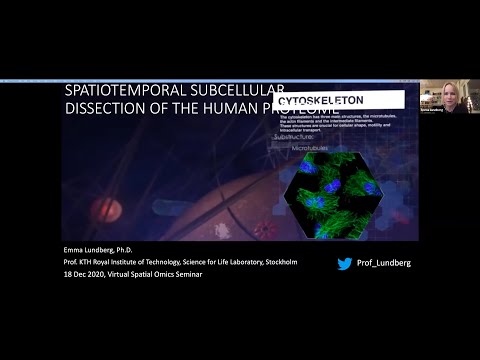

‪Emma Lundberg‬ - ‪Google Scholar‬ seems reallly understandable

https://twitter.com/_emmarosewest

https://www.lightseq.io/

rawrr

https://www.bioimagingguide.org/02_Sample_acquisition/Resources.html

Really though, image the shapes of organelles in response to intervention (or as one paper wrote, C ELEGANS MOVEMENT COMPLEXITY CAN DECREASE WELL BEFORE MORBIDITY/DEATH => MAKING IT POSSIBLE TO MEASURE DIFFERENCES IN AGING RATE [IN RESPONSE TO INTERVENTION] IN A WIDE VARIETY OF ORGANISMS THAT HAVE LONGER-THAN-MOUSE-LIFESPANS)

Microscopy of mitochondrial cristae structures as a way to measue decreases in function (see gladyshev latest paper)

phenotype screening (this applies for all levels of microscopy )

  • Cell age is a tricky phenotype to quantify — there isn’t a singular molecular marker we can rely on to predict all of the functional consequences of aging that we’re interested in. Rather than searching for a single molecular biomarker, NewLimit is building machine learning models that allow us to infer cell age from cell profiles (previously discussed in our February 2023 Progress Update).

‪Naixin Qian‬ - ‪Google Scholar‬ THIS is super-relevant (esp nanoplastics but also…)

oxford instruments has A LOT of good content I’m still trying to go thru

I also visited some of the Koch Institute scanning facilities lately…

some webinar:
https://register.gotowebinar.com/recording/recordingView?webinarKey=4767004550341430543

https://twitter.com/WallaceUcsf/status/1761105663529496740

far far out but worth seeing just for the hell of it

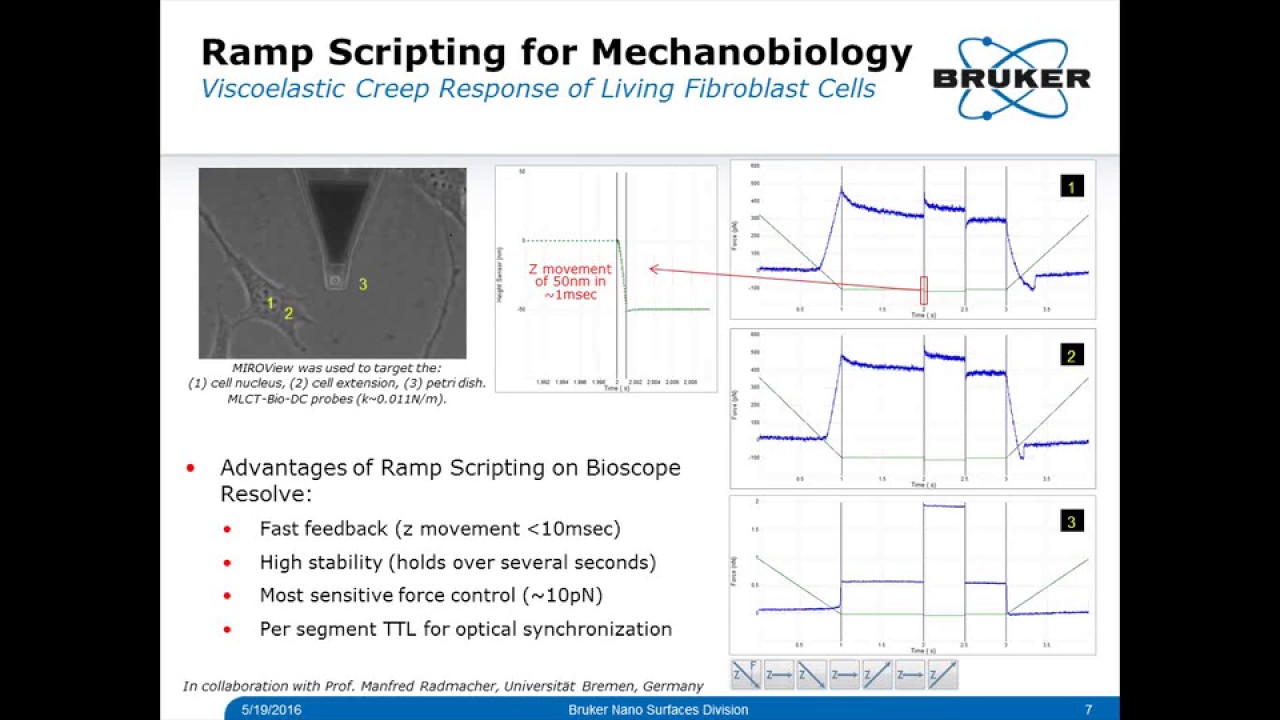
Manipulation and spectroscopy. The ability to mechan-
ically manipulate biological samples by the AFM tip
has raised the issues of measuring the forces interacting
between the AFM tip and sample and those interact-
ing between biological samples280. Force–distance curves
can be used to quantify the hydrophobic, hydrophilic,
electrostatic, van der Waals, Young’s modulus, energy
dissipation and many other physical properties of the
sample surface, provided that the properties of the AFM
tip have been defined by, for example, characteriz-
ing a reference sample. Sometimes, the tip is replaced
by a micrometre-sized bead to probe the mechanical
properties of larger surface areas of cells or tissues281.
Examples encompass measuring the elastic properties
of the cell cortex, neuronal tissues or even organs of liv-
ing animals34. However, to properly analyse the elastic
properties of a soft heterogeneous sample indented by
a sharp tip requires the application of theoretical mod-
els such as Hertz theory or similar models, which have
limitations and must be applied with care34,282. One way
to circumvent such limitations is to use a bare AFM
cantilever without the tip in a parallel plate assay, which
has shown that mammalian cells measure confining dis-
tances of their surrounding environment283 and round
up for mitosis by generating hydrostatic pressure284,285.
The physical properties, measured as force–distance
or force–time curves, depend on the speed or time at
which they are probed by AFM34. Consequently, the
elastic properties of biological systems probed at various
speeds can differ considerably286,287. To properly describe
the mechanical properties of a biological sample relies
on the characterization of these properties over a wide
range of speeds, which leads towards describing the
free-energy landscape of biomolecular bonds or the rheo-
logical properties of cells34. Approaches that probe the
time dependency of mechanical properties can provide
detailed insight into the non-linear active and passive
viscoelastic response of biological systems to mechanical
stimuli257,287 or the non-linear characteristic behaviour of
biological bonds288,289.
Using single-molecule force spectroscopy to meas-
ure specific forces between an AFM tip and a biological
system or between two biological systems requires tip
functionalization31 (Box 2). Single-molecule force spec-
troscopy is currently used as a tool to characterize the
binding of many different receptor–ligand interactions,
the stretching of polypeptides, nucleic acids or sugars,
or the unfolding of water-soluble and membrane pro-
teins. Single-molecule force spectroscopy has been used

wow so coollll

Based on my search, you might be referring to “RedTell: an AI tool for interpretable analysis of red blood cell morphology” or “Deep ensemble learning enables highly accurate classification of stored red blood cell morphology” by Routt et al. (2023), both of which analyze red blood cell morphology using machine learning and include images.

Went to About – HuBMAP Consortium event and have much better idea of why this is important.

See Sanjay Jain paper
[aging affects network motifs and changes in connectivity of how neurons and glomelar structure are connected/innervated with each other] - it affects their complexity, cell volume, and cell shape => and better analyzing this gives better mechanistic understanding of causality [and readouts of interventions that work!]

also works for neuron-capillary innervations and density and density/interconnectedness/cell size and shape of pretty much all cells
https://www.biorxiv.org/content/10.1101/2024.07.29.605633v1 => over the human lifespan